Signup for the Pharmacy Solutions Newsletter for Big Discounts!








Understanding Compounded Neurological Medications and Your Options When a standard neurological or behavioral health medication does not fit your needs, finding the right solution can feel like an uphill battle.
Behavioral and neurologic conditions affect millions of people across every age group. From attention and focus challenges in children to cognitive concerns in older adults, these conditions often require a highly individualized approach to care. For some patients, commercially available medications may not come in the right form, strength or combination. Others may have sensitivities to dyes, preservatives or inactive ingredients that make standard formulations difficult to tolerate. Compounded neurological medications give healthcare providers the flexibility to tailor prescriptions to the individual. The National Institute of Mental Health estimates that nearly one in five adults in the United States lives with a mental health condition in any given year, underscoring the scope of need for personalized medication options.[1] This page is designed to walk you through what neurological and behavioral health compounding involves, who it may help and how the process works.
What Are Compounded Neurological Medications?
Compounded neurological medications are prescription preparations that are custom made by a licensed pharmacist to meet a specific patient’s needs. They fall within a broad category that includes medications used to support patients with attention and focus concerns, mood and behavioral health needs, seizure management, cognitive function and neurodevelopmental conditions. Unlike commercially manufactured products that come in fixed strengths and forms, compounded preparations can be adjusted by dosage form, strength and ingredient profile based on a healthcare provider’s recommendation. This allows for a level of customization that is not always available through standard pharmacy channels.
Why Standard Neurological Medications May Fall Short
There are several reasons a commercially available neurological medication may not meet a patient’s needs.
- Some patients, particularly children, cannot swallow tablets or capsules and require a liquid suspension or flavored preparation.
- Certain medications may contain dyes, gluten, lactose or other inactive ingredients that trigger sensitivities or allergic reactions.
- A prescribed medication may have been discontinued by the manufacturer but remains clinically appropriate for the patient.
- The specific strength or dosage increment a provider recommends may not be commercially produced.
- Some care plans call for combination formulations that are not available as a single commercial product.
- Patients transitioning between dosage forms or tapering off a medication may need incremental strengths not available off the shelf.
Who May Benefit From Compounded Neurological Medications
Compounded neurological medications serve a wide range of patients. Children and adolescents with attention, behavioral or neurodevelopmental concerns often benefit from liquid suspensions, flavored preparations or dye-free formulations that improve tolerance and adherence. Pediatric patients in particular may require dosage forms that are easier to administer, especially for younger children or those with sensory sensitivities.
Adults managing mood, focus or cognitive concerns may also find that standard formulations do not align with their needs due to ingredient sensitivities or the unavailability of a specific strength. Older adults experiencing age-related cognitive changes may benefit from customized dosage forms that are easier to take, such as sublingual tablets or transdermal preparations. If you or a loved one has experienced difficulty tolerating a neurological medication or has been told that a particular product is unavailable in the form or strength needed, discussing compounding with your healthcare provider may be a worthwhile next step.
How Compounded Neurological Medications Are Approached
Neurological and behavioral health therapy is guided by a healthcare provider’s assessment of the patient’s condition, medical history and individual response to medication. When compounding is appropriate, a 503A compounding pharmacy like Pharmacy Solutions works directly with the prescriber to prepare a patient-specific formulation. This can include preparing oral suspensions, flavored liquids, sublingual tablets, transdermal gels, nasal sprays or capsules tailored to the patient’s needs. It can also involve modifying the strength, removing problematic inactive ingredients or combining multiple active ingredients into a single preparation based on the provider’s recommendation. The goal is to support the care plan with a formulation that fits the patient’s individual circumstances while meeting strict quality and safety standards.
Why Pharmacist Expertise Matters in Neurological Compounding
Neurological compounding requires a high level of precision and attention to detail. The stability, potency and bioavailability of the final preparation all depend on the skill and experience of the compounding team. At Pharmacy Solutions, every prescription is prepared by licensed pharmacists and backed by more than 125 years of collective compounding expertise. The pharmacy holds PCAB accreditation for both sterile and non-sterile preparations and maintains compliance with USP standards, including USP <797> and USP <800>.
This level of oversight means that whether your provider prescribes a flavored oral suspension for a child, a sublingual tablet for an adult or a nasal spray formulation, the preparation is made under conditions designed to meet the highest quality and safety benchmarks. Pharmacy Solutions also offers direct communication with pharmacists so that both patients and providers can ask questions and stay informed throughout the process.
Supporting Neurological Health With Over-the-Counter Options
In addition to prescription compounded medications, some patients explore over-the-counter supplements that may support general neurological and cognitive health. Pharmacy Solutions carries pharmaceutical-grade options available for purchase without a prescription. Metagenics Mag L-Threonate features magnesium L-threonate, a form of magnesium studied for its ability to cross the blood-brain barrier and its potential role in supporting cognitive health. Pro-Balance Pro B-Complex provides a comprehensive blend of B vitamins and choline, which play a role in neurotransmitter synthesis and brain energy metabolism. Sublingual B-Total offers a convenient liquid B-complex with B12 levels comparable to injection dosing. For foundational nutritional support, Pro-Balance Pro-Multi provides a broad spectrum of essential vitamins and minerals. As with any supplement, it is important to discuss options with your healthcare provider to ensure they are appropriate for your individual health needs.
More Resources for Your Health Journey



Sections
Best Sellers
-
 Quick View
 -
Quick View
-
Quick View
Tags
I am interested in
Anti-Infective Therapy
- Anti-Infective Therapy
- Behavioral & Neurologic Conditions
- Cardiac & Renal Disorders
- Chronic Cough & Respiratory Support
- Dermatology & Allergy Treatments
- Endocrine & Hormonal Disorders
- Gastrointestinal Disorders
- Hepatic Disease
- Ophthalmic Conditions
- Pain Management
- Palliative & Hospice Care
Educate Me
- Contact Me
- Show Me Blogs
- Show Me Search Results
- Show Me Products
- Educate Me
- Focus on Products
please
Having a pharmacy that could work directly with our doctor to prepare the right medication in a form that actually worked for our family made all the difference. The team took the time to answer every question we had.
Jennifer M.
Age 39
Daily Stress Support
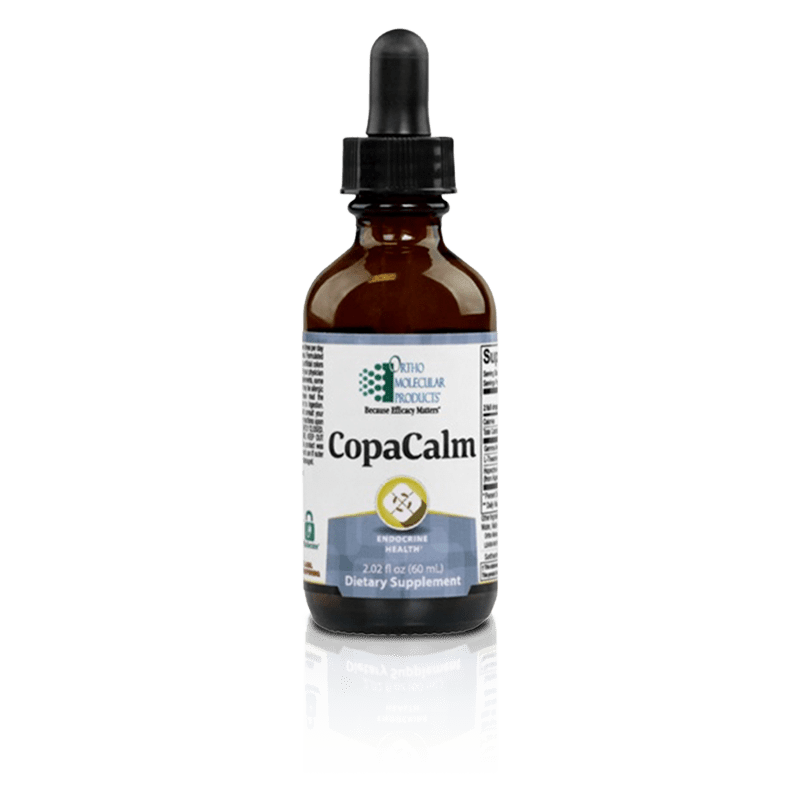
We highlight a curated selection of supplements and essentials chosen to support overall wellness and a steady, balanced daily routine you can stick with. Ortho Molecular CopaCalm is a daily supplement that many people fold into a balanced, healthy routine to support their everyday wellness goals.
These products are available now without a prescription, so you can begin whenever it works for you. Talk with your healthcare provider about which products and habits fit your wellness and your routine.
-
Quick View
Blog Hormones and Headaches: How Hormone Changes May Affect Migraine and Other Headache Types
Hormone changes can play a major role in migraines and some other headache patterns. Learn how estrogen shifts, menstrual cycles,…
Blog Why Compounded Medications Matter: Personalized Treatment for Better Patient Care
No two patients are exactly alike. Genetics, allergies, lifestyle, age, medical conditions, and personal preferences all influence how someone responds…
Blog 4-Aminopyridine (4-AP): Uses, Side Effects, and Compounded Medication Support
Learn how 4-Aminopyridine, or 4-AP, may support nerve conduction in certain neurological care plans, including possible side effects, safety considerations,…
Frequently Asked Questions About Compounded Neurological Medications
What is a compounded neurological medication?
A compounded neurological medication is a prescription preparation custom made by a licensed pharmacist based on a healthcare provider’s order. It is tailored to a specific patient’s needs, which may include a different strength, dosage form or formulation than what is commercially available.
Do I need a prescription for a compounded neurological medication?
Yes. Compounded neurological medications are prescription products. Your healthcare provider must evaluate your condition and submit a prescription to the pharmacy before a compounded medication can be prepared.
Why would a doctor recommend compounding for a neurological medication?
Your provider may recommend compounding if the medication you need is not available in the right strength, form or formulation. This is common when patients have allergies to inactive ingredients, when a medication has been discontinued, when a specific combination is needed or when a patient requires a dosage form such as a liquid or flavored suspension.
Can compounded medications be made for children with behavioral or neurological needs?
Yes. Compounding is frequently used for pediatric patients who need liquid suspensions, flavored preparations or formulations free of dyes, gluten or other ingredients that may cause sensitivities. The dosage form and strength can be customized to the child’s specific needs based on the prescriber’s recommendation.
What dosage forms are available for compounded neurological medications?
Depending on the prescriber’s recommendation, compounded neurological medications may be prepared as oral suspensions, capsules, sublingual tablets, transdermal gels, nasal sprays and other forms suited to the patient’s needs.
Is compounding safe for neurological medications?
When performed by a licensed, accredited 503A compounding pharmacy, compounding follows strict quality standards. Pharmacy Solutions is PCAB accredited for both sterile and non-sterile compounding and maintains compliance with USP <797> and USP <800>, with ingredients sourced from FDA-registered suppliers and independent third-party testing on all preparations.
Can compounded neurological medications be shipped to my home?
Yes. Pharmacy Solutions is licensed to ship compounded medications to patients across the country. Your medication can be shipped directly to your home with proper packaging and storage instructions included.
Ready to Get Started? Some pharmacies fill prescriptions. We take care of people.
Tell us a little about what you are looking for and we will take it from there. Whether you have a prescription ready, questions about a therapy your provider mentioned, or just need help figuring out your next step, our team is here and ready to help.
"*" indicates required fields