Enjoy 10% off for Patient Appreciation Day with code THANKUJULY on 7/15/2026 only!



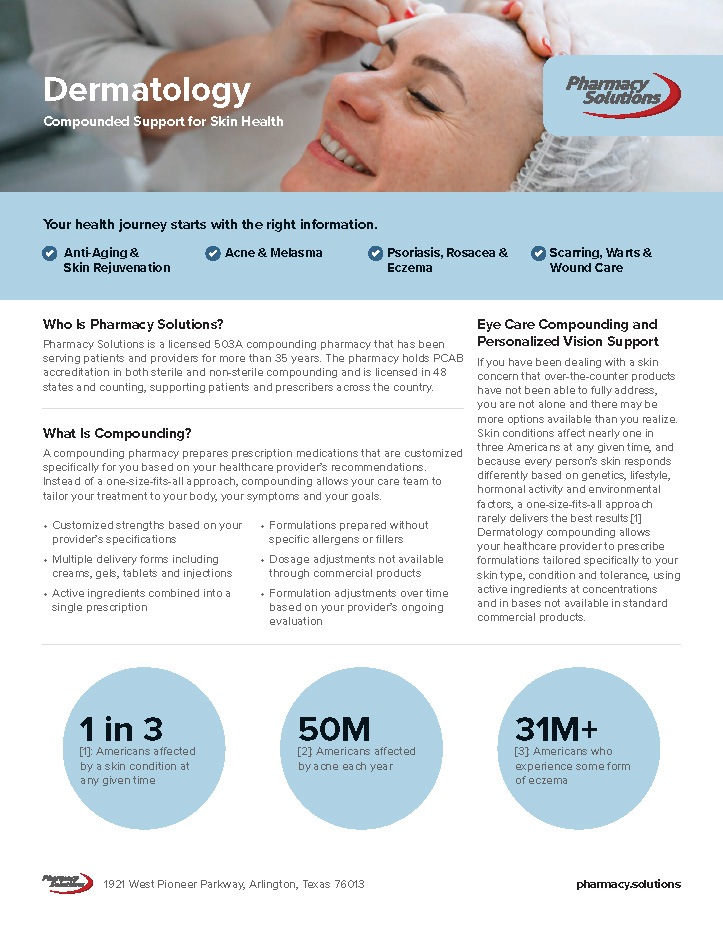
Enjoy 10% off for Patient Appreciation Day with code THANKUJULY on 7/15/2026 only!
15% off on all sunscreen and probiotics during July with code SUNSAFE15
The Pharmacy will be closed July 4th for Independence Day.

Warts are small, benign skin growths caused by infection with the human papillomavirus, or HPV. They are contagious and can spread through direct contact or contact with contaminated surfaces. While many warts resolve on their own over time, particularly in children, others persist for months or years and can become painful, spread to other areas or resist standard over-the-counter approaches. Compounding offers access to prescription-strength wart removal agents, including some that are not available in any commercial over-the-counter form, allowing healthcare providers to prescribe formulations suited to the specific wart type, location and patient situation.
The type of wart affects which approach a healthcare provider is most likely to recommend, making an accurate assessment an important first step.
Many over-the-counter wart products rely on salicylic acid at concentrations available without a prescription. While these can be effective for mild or superficial warts, persistent or deeper warts often do not respond adequately at these concentrations. Compounding allows healthcare providers to prescribe salicylic acid at higher concentrations suited to the specific wart and patient, and also provides access to prescription-strength agents that are not available in any commercial over-the-counter form.
The most significant example is cantharidin, a compound derived from blister beetles that has been used in dermatology for wart removal for many decades and which can only be accessed through compounding. Other prescription-strength agents such as podophyllum and fluorouracil are also available through compounding and may be appropriate for certain wart types and locations as determined by the prescribing provider. Pharmacy Solutions works directly with dermatologists and other prescribers to prepare individualized wart removal formulations based on each provider’s specifications.
The following active ingredients are commonly found in compounded wart removal formulations. The specific agent, concentration, formulation type and application protocol are always determined by the prescribing healthcare provider based on the wart type, location, patient age and history of previous approaches.
Cantharidin is applied by a healthcare provider in a clinical setting and works by causing a blister to form between the wart and the underlying skin, which separates the wart from the skin surface. It has been used in dermatology for decades and is considered highly effective for many common and plantar warts. Because it is not available commercially, compounding is the only way to access this preparation.[1]
Salicylic acid at prescription-strength concentrations dissolves the keratin protein that makes up wart tissue and is one of the most established topical wart removal agents. Compounded salicylic acid preparations can be prepared at higher concentrations and in delivery vehicles, such as collodion or DMSO-based solutions, that support deeper penetration into wart tissue than over-the-counter products provide.
Fluorouracil is an agent that interferes with abnormal cell division and can be incorporated into compounded topical preparations for persistent warts that have not responded to other approaches. It is sometimes combined with salicylic acid in a single compounded preparation. The specific formulation and application protocol are prescribed by the provider.
Podophyllum is a plant-derived agent that has historically been used in wart removal, particularly for certain wart types. Compounded podophyllum preparations allow providers to access this agent at appropriate concentrations for clinical use.
Combination formulations incorporating two or more of the above agents in a single preparation can be compounded at provider-specified concentrations, allowing simultaneous targeting of multiple pathways involved in wart persistence.
Pharmacy Solutions can prepare a wide range of compounded wart removal formulations combining these and other active ingredients at provider-specified concentrations and in delivery vehicles suited to the wart type and location. Your healthcare provider determines which formulation is most appropriate. If you have questions about specific options, reach the team through the Ask a Pharmacist feature.
If your healthcare provider prescribes a compounded wart removal formulation, knowing what the process involves can help set realistic expectations.
Pharmacy Solutions works with dermatologists, podiatrists and other healthcare providers to prepare compounded wart removal formulations that align with each prescriber’s protocols. The compounding team understands the specific delivery vehicle requirements for different wart removal agents, including collodion-based preparations and DMSO-containing solutions, and can communicate with prescribers to clarify formulation details. Every preparation is made per patient using pharmaceutical-grade ingredients.
Pharmacy Solutions maintains PCAB accreditation in both sterile and non-sterile compounding, a distinction held by fewer than 2% of compounding pharmacies in the United States, and has all formulations tested through third-party laboratories.[2] Whether you are exploring compounded wart care for the first time or have been referred by your provider for a specific preparation, the pharmacy team is available to support the process.
For patients with mild or early-stage warts, lower-strength over-the-counter salicylic acid products may be an appropriate starting point as discussed with a healthcare provider. Pharmacy Solutions carries a selection of pharmaceutical-grade skin care products through its shop. As always, discuss any new products with your healthcare provider to confirm they are appropriate for your specific wart type and location before starting.
I had been managing flares for years and never felt like I had a formulation that actually worked with my skin rather than against it. My dermatologist worked with Pharmacy Solutions to create something customized, and it has been the most consistent relief I have found. Having a team that actually communicates with your provider makes a real difference.
My daughter and I both have eczema, and finding formulations that work for two very different skin types felt impossible with standard products. Our dermatologist prescribed custom compounds through Pharmacy Solutions for each of us, and being able to avoid the specific ingredients that trigger our flares has made a real difference in how we manage day to day.
I had a keloid that had been bothering me for years. My dermatologist prescribed a compounded preparation through Pharmacy Solutions that was specifically formulated for my skin. Having something actually tailored to the type and location of the scar made me feel like we were finally addressing it the right way.
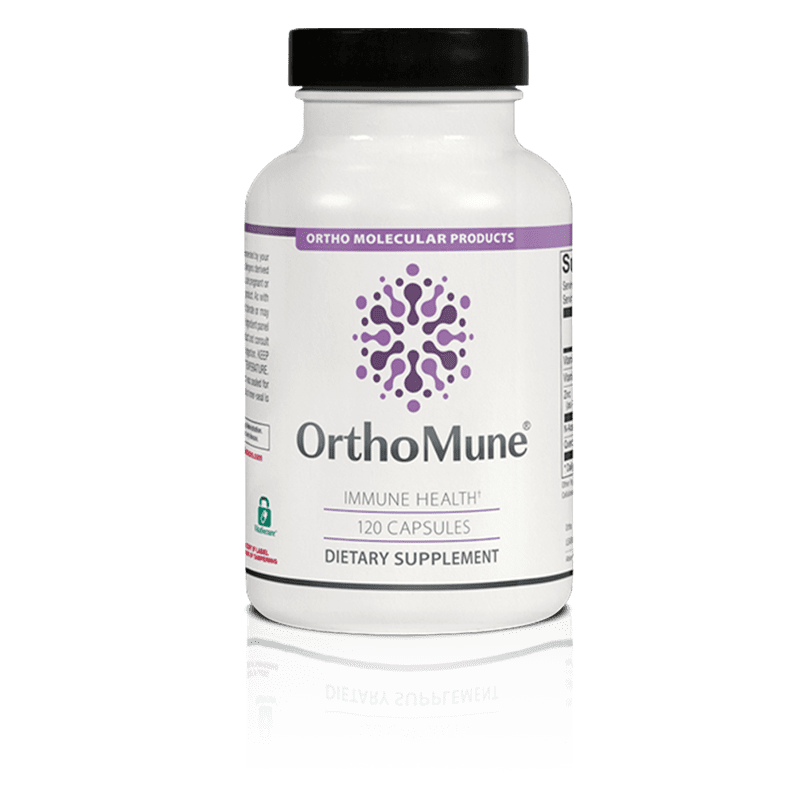
We feature a curated selection of supplements and wellness essentials chosen to support immune health and your overall wellness as part of your everyday wellness routine. Ortho Molecular OrthoMune combines vitamins, minerals, and botanicals that many people use to support a healthy immune system throughout the day.
These supplements are available now without a prescription, so you can start whenever it works for you. Check with your healthcare provider before adding anything new to your current routine or care plan.
No two patients are exactly alike. Genetics, allergies, lifestyle, age, medical conditions, and personal preferences all influence how someone responds…
Warts are small, benign skin growths caused by infection with certain strains of the human papillomavirus, or HPV. The virus enters the skin through small cuts or breaks and causes abnormal cell growth on the skin’s surface. Warts are contagious and can spread through direct skin contact or contact with surfaces that an infected person has touched. They are not dangerous but can be uncomfortable, persistent and difficult to clear, particularly in certain locations such as the bottom of the feet.
Several types of warts exist based on their location and appearance. Common warts typically appear on the hands, fingers and around the nails and have a rough, raised surface. Plantar warts develop on the soles of the feet and can be particularly painful due to pressure from standing and walking. Flat warts are smoother and smaller and tend to appear in clusters on the face, legs or arms. Filiform warts are thread-like or finger-shaped and often appear near the eyes, mouth or nose. Periungual warts develop around or under the fingernails or toenails.
Yes. Compounded wart removal formulations containing prescription-strength agents such as cantharidin, podophyllum or fluorouracil require a valid prescription from a licensed healthcare provider. Some over-the-counter products containing lower concentrations of salicylic acid are available without a prescription, though persistent, painful or difficult warts often require provider-directed care.
Cantharidin is a compound derived from blister beetles that has been used in dermatology for wart removal for many decades. It works by causing a blister to form between the wart and the underlying skin, which separates the wart from the skin surface. It is applied by a healthcare provider in a clinical setting and is not available in commercial over-the-counter products, making compounding the only way to access this formulation. The specific preparation and application protocol are determined by your provider.
Fluorouracil is a medication that interferes with the abnormal cell growth associated with wart tissue. It is sometimes used topically in compounded preparations for persistent warts that have not responded to other approaches. The specific formulation, concentration and application schedule are prescribed by a healthcare provider based on the wart type and location.
The number of applications needed varies significantly based on the wart type, location, size, duration and individual immune response. Some warts resolve with a single application of certain compounded agents such as cantharidin, while others may require multiple applications over several weeks. Your healthcare provider determines the appropriate protocol and will monitor progress.
Yes. Warts remain contagious throughout the treatment period. It is important to avoid touching the wart and then touching other areas of skin, to keep the treated area covered as directed by your provider and to avoid sharing towels, footwear or other items that may transfer the virus. Following your provider’s instructions carefully helps reduce the risk of spreading during the treatment process.
[1] Silverberg NB. Warts and molluscum contagiosum in children. Adv Dermatol. 2004;20:23-73. https://pubmed.ncbi.nlm.nih.gov/15544194/
[2] Pharmacy Compounding Accreditation Board (PCAB). Accreditation Commission for Health Care. https://www.achc.org/pcab/
[3] Lipke MM. An armamentarium of wart treatments. Clin Med Res. 2006;4(4):273-293. https://pmc.ncbi.nlm.nih.gov/articles/PMC1764803/
Tell us a little about what you are looking for and we will take it from there. Whether you have a prescription ready, questions about a therapy your provider mentioned, or just need help figuring out your next step, our team is here and ready to help.
"*" indicates required fields

To submit your order, click the “PRINT/SAVE” button located under this pop-up.

You can save the PDF to your computer to fax at a later date or print it now to fax immediately.
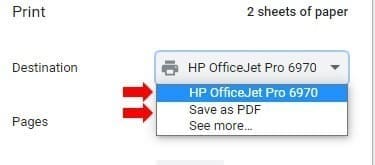
Fax your order form to 817-860-6083 for processing.
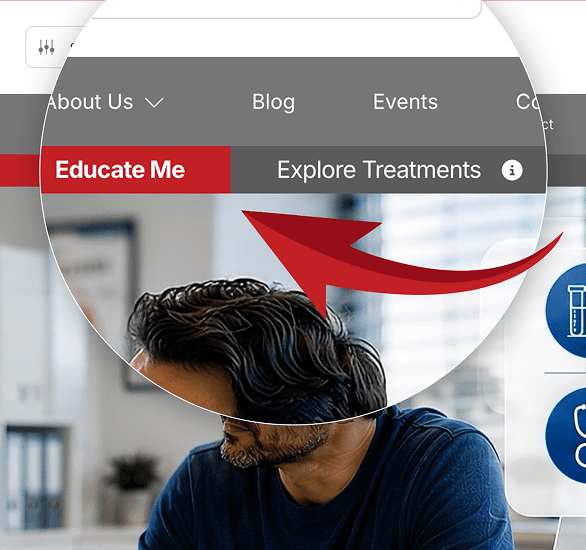
Get detailed information, research, and deeper product context. Toggle on to see more educational content.
Keep things brief and see related products faster. Toggle on to focus on products.

New to Pharmacy Solutions? Register now
Educate Me
Get detailed information, research, and deeper product context.
Toggle on to see more educational content.
Explore Treatments
Keep things brief and see related products faster.
Toggle on to focus on products.